Rwanda’s minerals are now a US priority
On December 4, 2025, in Washington, Rwanda and the United States signed the Framework for Shared Economic Prosperity. It was signed on the same day as the Washington Accords for Peace and Prosperity between Rwanda and the Democratic Republic of Congo, and alongside a Regional Economic Integration Framework between the two neighbours. Investors read it one way. Washington wants tungsten, tin and tantalum from this region, and it wants them through supply chains it can trace.
What has happened since the signing
On September 14, 2026, Almonty Industries and the Government of Rwanda announced a joint venture, Almonty Rwanda Pty Ltd. Almonty will hold 75% and the Government 25%. In exchange for its stake, the Government contributes the Shyorongi tungsten exploration concession, about 32 square kilometres in Rulindo District, and a mineral processing licence for a mobile tailings unit. Almonty says the United States Department of State made the introduction.
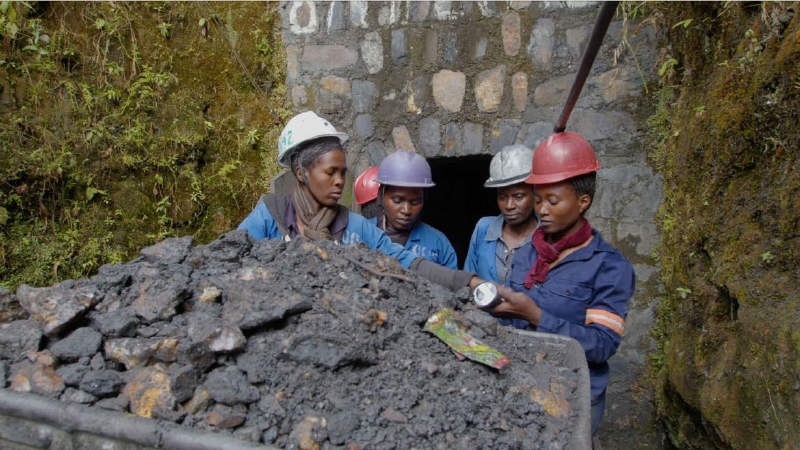
Trinity Metals, which runs the Nyakabingo mine, already ships tungsten concentrate to Global Tungsten & Powders in Pennsylvania. The company says it has sent more than 320 tonnes. According to United States Geological Survey figures for 2024, Rwanda was the sixth largest tungsten producer in the world and the third largest producer of tantalum.
The timing is tight. New United States defence procurement rules take effect in January 2027 and require tungsten in certain military supply chains to be traceable to its source. A producer that can prove origin is ahead of the pack.
The law an investor must read first
The framework is a political agreement. Its full text has not been published, so nobody should treat it as a blank check. The rules that bind an investor are in Law n° 072/2024 of June 26, 2024 on mining and quarry operations, published in the Official Gazette on July 24, 2024.
Article 7 creates four kinds of licence, for exploration, mining, mineral trading and mineral processing. Mining licences are graded as small, medium or large scale. Under Article 13, an exploration licence runs for up to four years and may be renewed once. A mining licence runs for up to 15 years and may be renewed more than once, with the term fixed by the feasibility study and project plan.
An investor should note three other features from day one.
First, Article 49 gives the Government a free carried interest, which is a stake it does not pay for upfront, and the State may also acquire shares. The Almonty structure, with 25% held by the Government, shows how this works in practice. An investor should build State participation into the financial model before making an offer.
Second, under Article 3 the competent authority may designate strategic minerals over which the Government holds exclusive rights. A licence for one mineral does not give a free hand over everything found in the ground.
Third, the penalties are heavy. Illegal mining carries up to five years in prison and a fine of up to RWF 80 million. Illegal trading in minerals carries up to ten years and a fine of up to RWF 150 million. A court may also dissolve a company found guilty. Under the earlier law the fines were below RWF 1 million, so the State has decided to clamp down on informal trade.
Money, currency and contracts
Mining operators engaged in minerals trading are among the businesses the National Bank of Rwanda treats as authorised to transact in foreign currency, under Directive n° 4230/2025-00042 [613] of September 17, 2025. That is helpful for export contracts priced in US dollars. Suppliers and contractors to a mine do not automatically share that status, so service contracts should be checked one by one.
The other side of the coin
Traceability is where a deal can fall through. A buyer in the United States will ask for proof that every tonne came from a licensed Rwandan site. The Regional Economic Integration Framework calls for transparent supply chains, and the Almonty venture plans to buy ore and tailings from small licence holders. Each of those purchases needs a paper trail that can survive an audit, and Article 50 of the mining law deals with failure to indicate the origin of minerals.
There is also sanctions risk. In March 2026 the United States Treasury sanctioned the Rwanda Defence Force and four senior officials. An investor with United States links must screen counterparties, shareholders and payment routes before signing, and must keep screening afterwards.
A game plan for 2027
Agree the State’s share early, because it affects valuation, board seats and dividends.
Write traceability into every supply contract. Require suppliers to show their own licences and keep records of origin, weight and transport.
Then crunch the numbers on processing. The Government wants value added in Rwanda, and the Almonty agreement already points to a collection and processing plant as the next stage. A plan that only exports raw concentrate may win less support.
The bottom line is this. Demand from the United States is there, the first transactions have closed, and Rwandan law now sets firm conditions. Investors who do it by the book will be in the driver’s seat for the long haul.