What Investors Need to Know About Doing Business in Rwanda in 2026
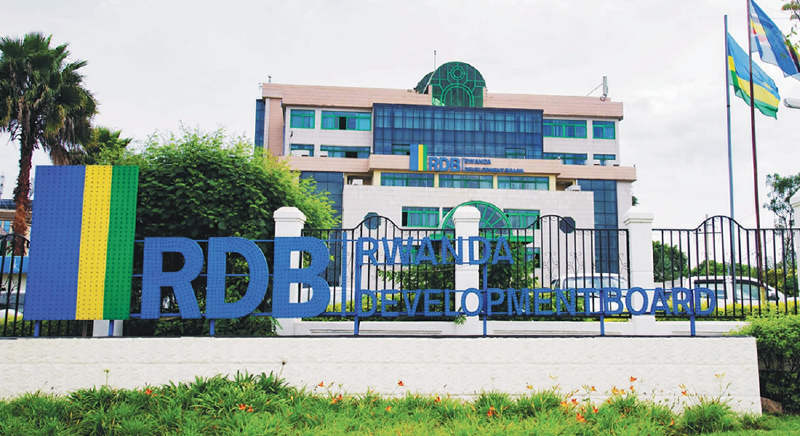
Rwanda entered 2026 on a roll. The economy grew by 9.4% in 2025, the Rwanda Development Board (RDB) registered USD 2.62 billion in new investment across 799 projects, and tourism earned USD 685 million. For investors weighing where to put capital in East Africa, the country offers stability, speed and a clear rulebook. What follows is what you need to know before you get your foot in the door. Just do it by the book.
A growing, diversified economy
Growth in 2025 was led by industry and services, and the third quarter alone recorded 11.8%. The largest shares of registered investment went to real estate, manufacturing and mining, and the 2025 project pipeline is expected to create more than 38,000 jobs. Export receipts reached about USD 3.6 billion, driven by minerals, agriculture and horticulture. This performance is in line with the Government’s medium-term plan, the Second National Strategy for Transformation (NST2), which runs from 2024 to 2029 and puts private-sector-led growth, exports, high-value tourism and innovation first. For investors, policy is pointing in the same direction as opportunity. Keep out of hot water.
Setting up is fast
That policy shows in how quickly a business can start. Companies are incorporated under Law n° 007/2021 of 05/02/2021 governing companies. Registration is done online through the RDB, and a private company can often be registered within a day. Foreign investors may own 100% of most businesses, with no general requirement for a local partner. Once incorporated, a company registers for tax with the Rwanda Revenue Authority (RRA) and for social security with the Rwanda Social Security Board (RSSB). Investors who meet the thresholds can also obtain an investment certificate under Law n° 006/2021 of 05/02/2021 on investment promotion and facilitation. The certificate is valid for five years, is renewable, and opens the door to incentives such as preferential corporate income tax rates, accelerated depreciation and, for very large projects of at least USD 50 million, a corporate income tax holiday of up to seven years. Keep out of hot water.
The tax picture in 2026
Incentives aside, every investor needs to understand the ordinary tax rules. The core statute is Law n° 027/2022 of 20/10/2022 establishing taxes on income, under which the standard corporate income tax rate is 28%. In 2025, a package of reforms adopted through Law n° 014/2025 of 27/05/2025 amending Law n° 027/2022 of 20/10/2022 establishing taxes on income and related laws, published on May 29, 2025, changed several rules. Capital gains tax doubled from 5% to 10% and now reaches transfers of debt instruments and mining licences as well as shares. A 1.5% digital services tax was introduced for digital service providers with a substantial presence in Rwanda, although it takes effect only once a ministerial order sets out how it works. New levies include a 3% tourism tax on accommodation and a 0.2% environmental levy on imported goods packaged in plastic. In addition, VAT was extended to ICT equipment, phones and SIM cards, while new exemptions favour electric vehicles and charging equipment until June 30, 2028. Employment costs have moved too. Mandatory pension contributions rose from 6% to 12% of gross salary in January 2025, and further increases are scheduled from January 2027.
Foreign exchange rules are stricter
Alongside tax, investors must watch the currency rules, because the National Bank of Rwanda (NBR) has clamped down on unauthorised use of foreign currency. Regulation n° 89/2025 of 23/05/2025 amending the Regulation n° 42/2022 of 13/04/2022 governing foreign exchange operations prohibits pricing goods and services in foreign currency without NBR permission. Fines start at RWF 5,000,000, and unauthorised transactions can attract a penalty of 50% of the amount transacted. Investors should price locally in RWF unless an exception clearly applies. It’s a win-win situation.
Compliance areas you cannot ignore
Three other statutes apply to almost every business. On data protection, Law nº 058/2021 of 13/10/2021 relating to the protection of personal data and privacy requires registration with the National Cyber Security Authority (NCSA) before personal data is processed. On financial crime, Law nº 001/2025 of 22/01/2025 on the prevention and punishment of money laundering, terrorist financing and financing of proliferation of weapons of mass destruction raised the bar on customer due diligence and beneficial ownership. On employment, Law n° 66/2018 of 30/08/2018 regulating labour in Rwanda governs contracts, leave, termination and workplace safety. Just do it by the book.
Regional and global access
Beyond the domestic market, Rwanda is a member of the East African Community and the African Continental Free Trade Area, which gives investors a gateway to a much larger market. In December 2025, Rwanda, the Democratic Republic of Congo and the United States signed agreements that include a Regional Economic Integration Framework, expected to boost cross-border investment in minerals, energy and infrastructure. The Kigali International Financial Centre adds a platform for holding companies, funds and regional headquarters.
Key takeaways for investors
All of this points to four practical steps. Investors should crunch some numbers on the 2025 tax changes, particularly capital gains tax and pension costs, before finalising a structure. They should apply for incentives up front, because many benefits depend on holding an investment certificate before the investment is made. They should respect the RWF rule, since pricing in dollars without approval is one of the quickest ways to land in hot water with the regulator. And they should build compliance in from day one, because data protection, anti-money laundering and labour obligations apply from the start. Rwanda in 2026 is no long shot. It is a predictable, well-governed market with strong growth and rules that are clear and enforced. Investors who learn the ropes, plan for tax and foreign exchange obligations and take compliance seriously will find it a rewarding base for the long haul.