A Closer Look at Mining Regulation in Rwanda
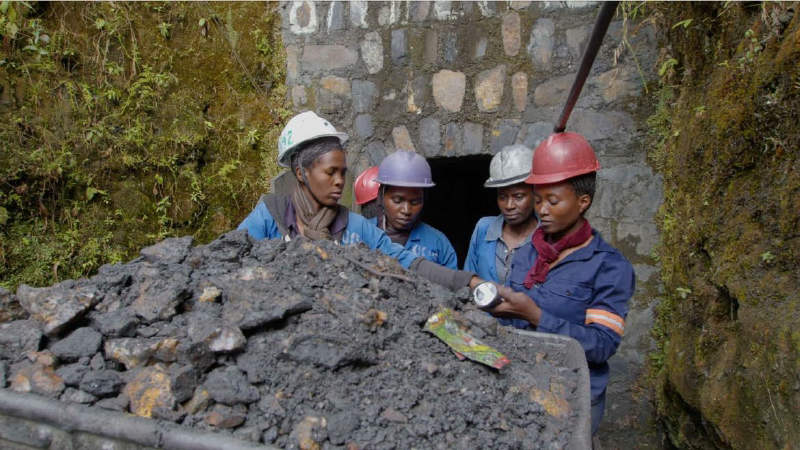
To mine in Rwanda, you need more than a good geological report. You need the right licence from the right regulator, an approved environmental assessment, an agreement with the state, respect for landowners and a clear grasp of the tax bill. This article follows the regulatory path in the order an operator meets it, so that investors know what to expect before they break ground.
The legal sources
The sector is governed by Law n° 072/2024 of 26/06/2024 on mining and quarry operations, which replaced Law n° 58/2018 of 13/08/2018 on mining and quarry operations. It is supplemented by presidential orders, ministerial orders and regulations of the regulator, which apply unless they conflict with the law. Related statutes include Law n° 32/2015 of 11/06/2015 relating to expropriation in the public interest and Law n° 27/2021 of 10/06/2021 governing land. Taxes are dealt with in Law n° 056/2024 of 26/06/2024 on minerals tax and in Law n° 027/2022 of 20/10/2022 establishing taxes on income, as amended. Just do it by the book.
Who regulates
Two bodies apply these laws. The Rwanda Mines, Petroleum and Gas Board (RMB) is the main regulator and issues mineral and quarry licences, while the Rwanda Development Board (RDB) approves environmental and social impact assessments. Licences issued under the 2018 regime remain valid until they expire, so operators may be working under either framework.
Understanding who owns the minerals
The path begins with ownership. Under Article 4 of the 2024 law, rights to minerals are vested in the state, even where the land is privately owned, and Article 43 of the land law confirms that principle. A landowner cannot grant mineral rights, and a miner cannot rely on a land title alone. The right to explore or mine comes only from a licence. You get more bang for your buck.
Obtaining the right licence
The licence is accordingly the second stage. The law distinguishes mineral licences from quarry licences, and only a licence holder may carry out exploration, exploitation, processing or trading. Exploration and mining licences are recorded by the RMB, and recent industry guides cite roughly 21 active exploration licences and 194 active mining licences. Because trading and processing are also licensed activities, buyers, traders and refiners need to check that their own permissions match their business model. It is a no-brainer.
Completing the environmental and social assessment
A licence alone does not allow work to start. Before operations begin, the holder must submit to the RMB an environmental and social impact assessment approved by the RDB. The 2024 law places greater emphasis on environmental, social and governance standards, mandatory rehabilitation and the formalisation of artisanal miners. Lenders will typically ask for the assessment and management plans before they release funds.
Dealing with landowners and communities
The people on the land come next. If a mineral or quarry deposit is discovered, the landowner or lawful occupier must be fairly compensated under the expropriation law. Compensation must be paid before the land is taken, so operators should budget time and money for valuation, consultation and payment, and should keep careful records.
Signing the agreement with the state
After obtaining a mineral licence, the holder enters into an agreement with the state that sets out the conditions for mining activities. The 2024 law also gives government more discretion over strategic minerals, including the option of taking a stake in mining projects. Investors in strategic minerals should open that conversation early.
Budgeting for fees and taxes
With rights and agreements in place, the operator must foot the bill for several layers of cost. Application, annual, renewal and transfer fees vary by licence type and area, and transfer fees are reported to range from RWF 900,000 to RWF 4,500,000. Holders of mining licences pay annual surface rent of RWF 6,500 per hectare. The minerals tax law generally sets royalties between 0.5% and 3%, and industry guides report that the rate for base metals fell from 4% to 3% and the rate for gold to 0.5%, with a new category for minerals exported in raw form. The law also introduces a tax on raw mineral exports, while exported minerals are zero-rated for VAT, and customs duties follow the East African Community Common External Tariff. Finally, since Law n° 014/2025 of 27/05/2025 amending Law n° 027/2022 of 20/10/2022 establishing taxes on income, capital gains tax is 10% where it was 5%, and it now covers transfers of mining licences, debt instruments and other structured financial assets. Time to get the ball rolling.
Staying on the right side of enforcement
The last stage never ends, because compliance continues for the life of the mine. The 2024 law introduced harsher penalties for illegal mining and for illicit mineral trading or export, including criminal sanctions, fines and rehabilitation duties. Compliance also means keeping accurate production and sales records, using only licensed counterparties and addressing community complaints promptly. Let’s cut to the chase.
Bringing it together
In practical terms, an operator should confirm which regime governs each licence and when it expires, and should match its activities, whether exploration, mining, processing or trading, to the licences it holds. It should secure the impact assessment before starting work and document landowner compensation. It should model the full tax burden, including the raw export tax and capital gains tax, and maintain traceability and records throughout. Rwandan mining regulation is detailed, but it follows a clear sequence. The state owns the minerals, the RMB grants the rights, and the conditions run from licence to assessment to state agreement to tax. Operators who take the steps in order and do not cut corners on paperwork can bring projects from exploration to production with fewer delays.